Orbitofrontal Cortex — Function, Location & Quiz
The orbitofrontal cortex sits where its name suggests—on the frontal surface above the eye sockets—and specializes in what outcomes are worth now. Unlike broader prefrontal planning, orbitofrontal computation is especially sensitive to changing rewards, which is why reversal learning is such a revealing test of it.
A person with orbitofrontal damage may know a rule and still fail to update behaviour when the consequences change. That gap between knowledge and value-guided choice makes the region clinically relevant to disinhibition, addiction and compulsive behaviour.
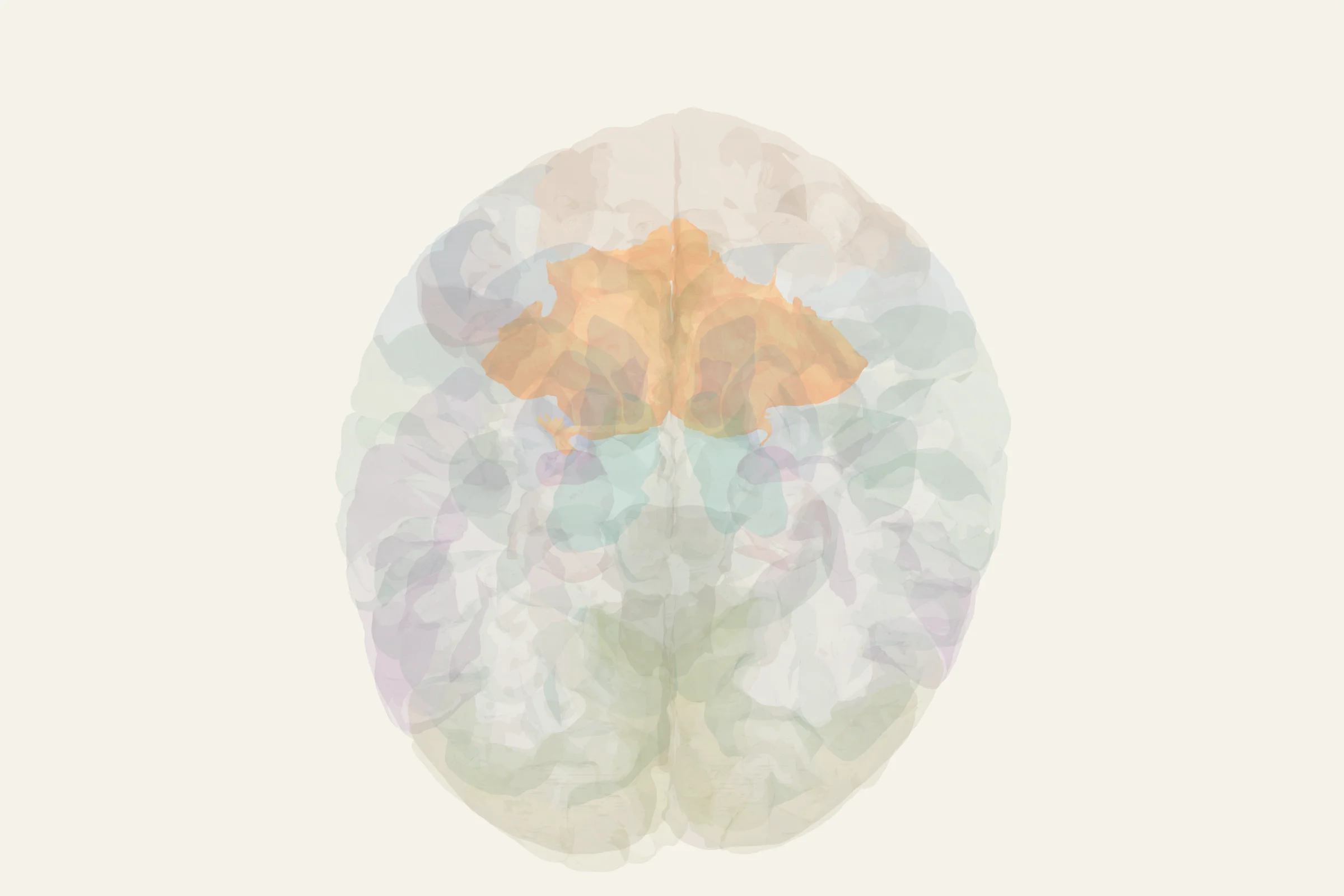
Test this anatomy in the Lesion Localization Quiz or open the interactive 3D brain model.
Where is the Orbitofrontal Cortex located?
Reward processing, emotion regulation, value-based decisions.
What does the Orbitofrontal Cortex do?
- Reward valuation and outcome expectancy
- Emotion regulation and social decision-making
- Reversal learning — updating behavior when rewards change
- Representing the pleasantness of stimuli (taste, smell, touch)
Orbitofrontal Cortex pathways and connections
- OFC ↔ Amygdala (emotional evaluation)
- OFC ↔ Ventral Striatum (reward processing)
- OFC ↔ Anterior Insula (interoceptive awareness)
What happens when the Orbitofrontal Cortex is damaged?
- OFC damage → impulsive behavior, poor social judgment
- Associated with behavioral variant frontotemporal dementia (bvFTD)
- Dysfunction linked to obsessive-compulsive disorder (OCD)
- Substance abuse — impaired reward/risk evaluation
Orbitofrontal Cortex key facts
Atlas category: cortical. Brodmann areas or landmark: BA 11, 12, 47.
- Receives input from all sensory modalities — a convergence zone
- Rolls: OFC encodes the 'reward value' of stimuli, not their identity
- Critical for 'stimulus-reward association' learning
Orbitofrontal Cortex exam tip
OFC is about VALUE — what things are worth. PFC is about PLANNING — what to do about it.
Common questions
What is the main function of the orbitofrontal cortex?
It represents reward value, predicts outcomes, supports reversal learning and helps emotion guide social and value-based decisions.
How is the orbitofrontal cortex different from the prefrontal cortex?
The orbitofrontal cortex is a prefrontal subdivision with a strong role in valuation and updating stimulus-reward associations. The wider prefrontal cortex also includes systems for working memory, planning and cognitive control.
What can orbitofrontal damage cause?
It can cause impulsivity, poor social judgment and difficulty changing behaviour after rewards or punishments change. Orbitofrontal dysfunction is also associated with behavioural-variant frontotemporal dementia and OCD.