Basal Ganglia — Function, Location & Quiz
The basal ganglia select actions by controlling a brake that is normally on. Movement does not result from simple excitation: the direct pathway inhibits an inhibitory output, releasing the thalamus through disinhibition, while indirect and hyperdirect routes strengthen stopping.
This double-negative logic is why Parkinson’s and Huntington’s disease look like opposites. Too much effective brake makes movement difficult to initiate; loss of the restraining pathway allows unwanted movement to escape.
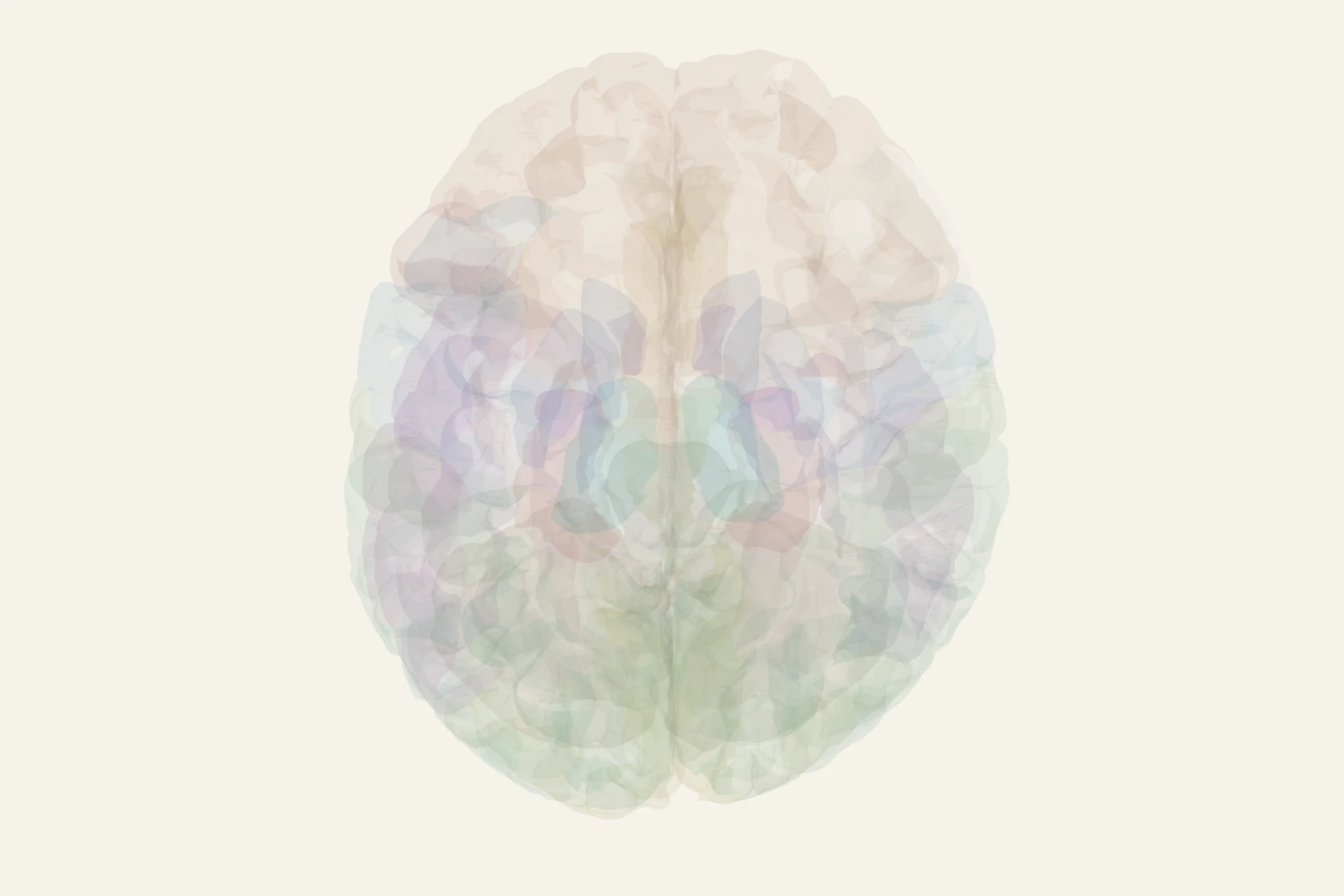
Test this anatomy in the Lesion Localization Quiz or open the interactive 3D brain model.
Where is the Basal Ganglia located?
Movement initiation, habit learning, reward processing, action selection.
What does the Basal Ganglia do?
- Action selection — choosing which movement to execute
- Inhibiting competing motor programs
- Reinforcement learning and reward-based decision making
- Procedural learning and habit formation
Basal Ganglia pathways and connections
- Direct pathway (D1): Striatum → GPi (inhibit) → Thalamus (disinhibit) → Cortex = GO
- Indirect pathway (D2): Striatum → GPe → STN → GPi → Thalamus = NO-GO
- Hyperdirect pathway: Cortex → STN → GPi (fast STOP signal)
What happens when the Basal Ganglia is damaged?
- Parkinson's: dopamine loss → excessive indirect pathway → difficulty initiating movement
- Huntington's: striatal degeneration → excessive direct pathway → involuntary movements (chorea)
- Tourette syndrome: basal ganglia dysfunction → tics
- Hemiballismus: STN lesion → violent contralateral flinging movements
Basal Ganglia key facts
Atlas category: subcortical.
- Direct pathway = accelerator. Indirect pathway = brake. Balance is key
- Dopamine has OPPOSITE effects: D1 (excite direct/Go) vs. D2 (inhibit indirect/NoGo)
- L-DOPA for Parkinson's restores this balance by replenishing dopamine
Basal Ganglia exam tip
Direct = Go (D1, disinhibits thalamus). Indirect = NoGo (D2, inhibits thalamus). Parkinson's = too much brake. Huntington's = too much gas.
Common questions
What do the basal ganglia do?
They select desired actions, suppress competing motor programs, support habit learning and use reward signals to adjust future choices.
What is the difference between direct and indirect basal-ganglia pathways?
The direct D1 pathway disinhibits thalamus and facilitates action; the indirect D2 pathway increases thalamic inhibition and suppresses competing action.
How do Parkinson’s and Huntington’s disease differ in this circuit?
Parkinson’s dopamine loss produces excessive effective braking and reduced movement, while early Huntington’s striatal degeneration weakens inhibitory control and produces chorea.